Internal communication
Great workplaces are built on great internal communication. When people are well informed, genuinely heard, and connected to what is happening around them, they show up differently. MELP is an all-in-one internal communications platform that combines news, surveys, and feedback tools in a single, mobile-first app, so every employee stays connected.

of employees say that communication affects how effectively they complete their tasks each day
of employees feel they are not receiving all the important news and information
Reach employees directly with effective internal communication
Effective internal comms do not have to be complicated. MELP gives HR teams the tools to share news, gather feedback, and keep every employee connected, wherever they work.

Create internal messages
From holiday greetings to important policy updates or mandatory surveys, MELP ensures your internal communications reach everyone, anywhere and at any time.

Choose your audience
Segment your employees by team, seniority, or any way you choose. Send targeted messages to the right audience for maximum engagement.

Tailor the delivery
You know your employees best, so you can choose when, in what language, and in which format to deliver your message.

Receive feedback
Your employees can react, comment, and engage with your news, turning internal business communication into a genuine two-way dialogue.
Internal communications that strengthen connections
Listen and be heard using a variety of internal comms formats that keep every employee in the loop.
News & announcements
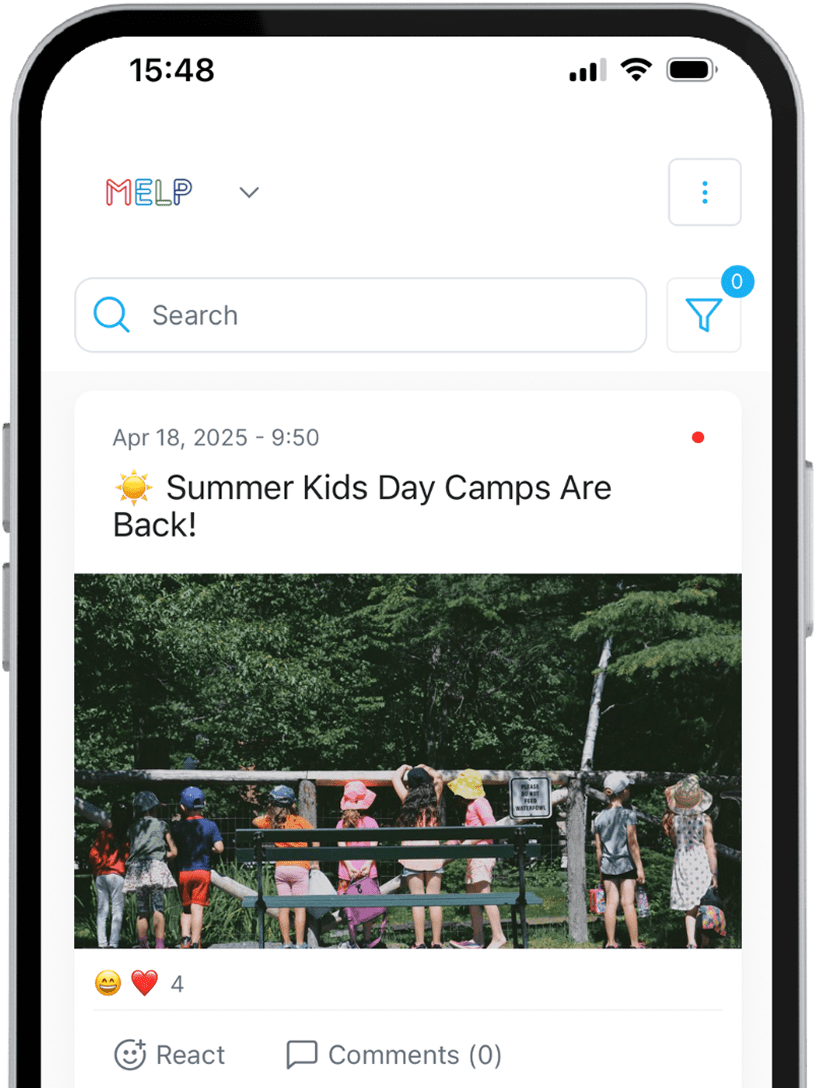
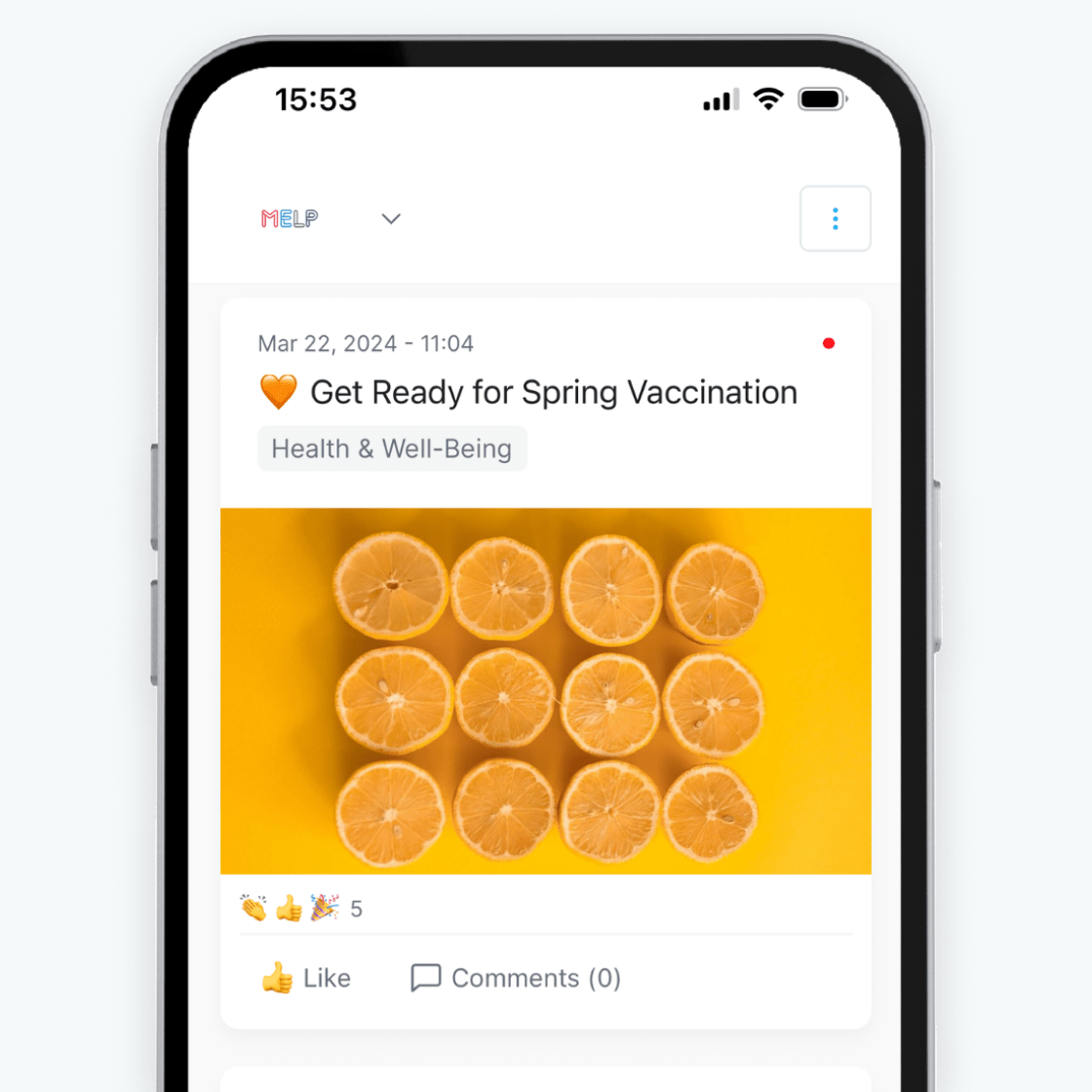
No one gets left out. With MELP's news section and automatic app notifications, your employees always receive the most important information on time.
Feedback inbox
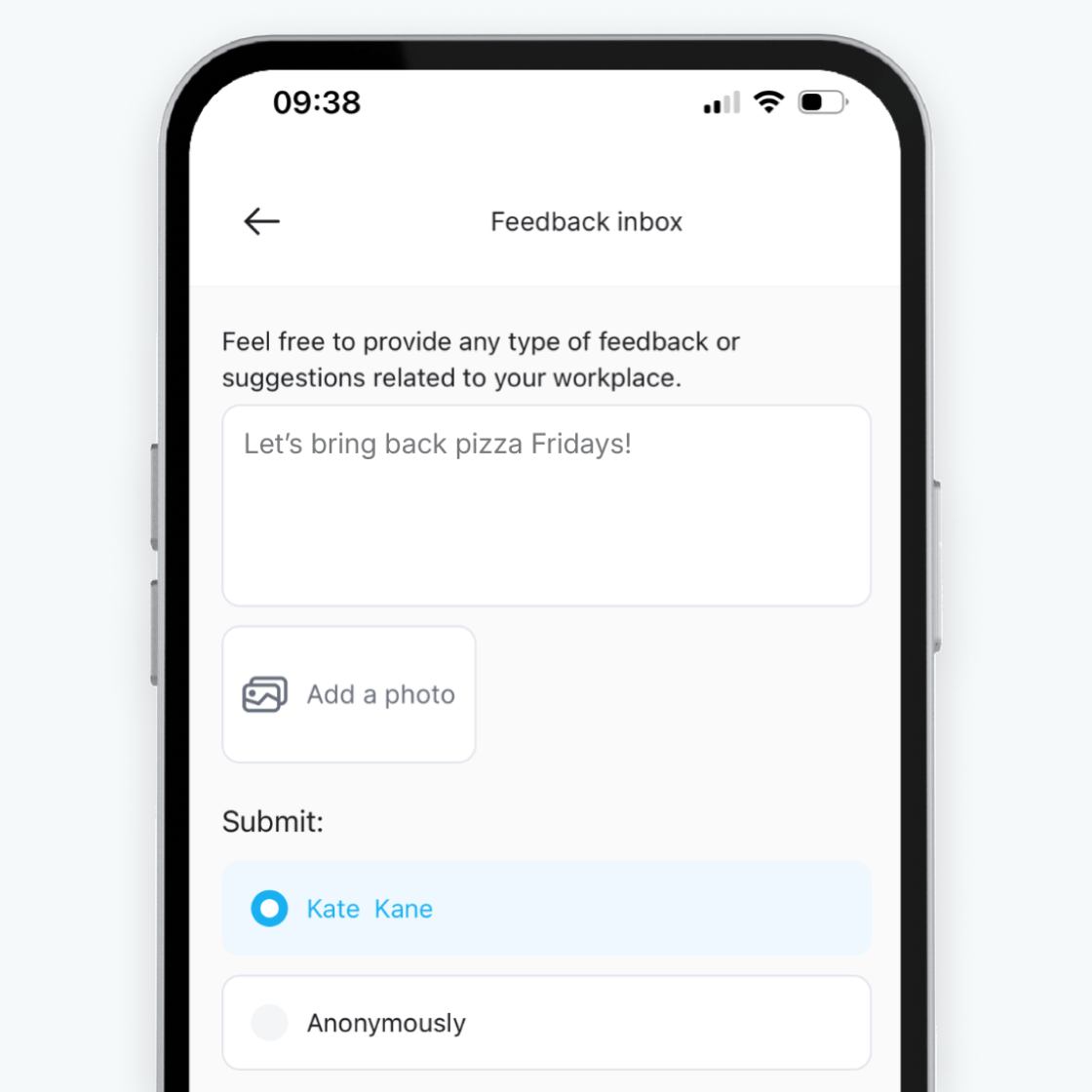
Public or anonymous, every employee's feedback is valuable. Listen to your team and stay compliant with the EU Whistleblowing Directive by using MELP's feedback inbox.
Surveys
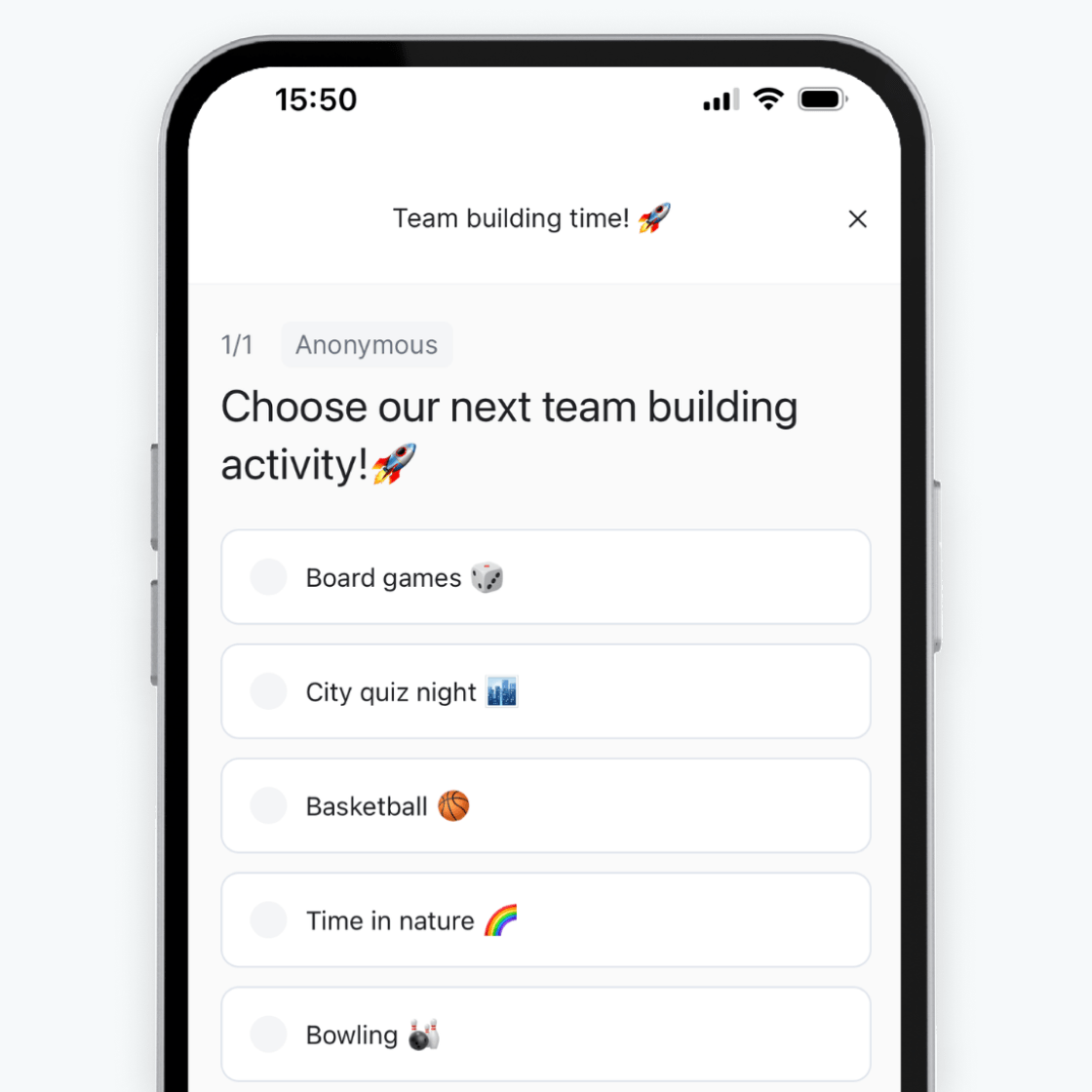
Struggling to encourage employees to complete surveys and gather results? With MELP, surveys become convenient and can be completed in just a few clicks.
Since most of our employees work in Duty Free stores without computer access, it was quite difficult to reach them. But as we all know, everyone has a phone these days - so now, with MELP, employees instantly receive reminders about updates or new benefits and never miss important information. It’s all delivered to them, right here and now.


“MELP is a tool that allows us to reach all employees in the organization, to ensure that all information reaches them on time and is relevant. We are especially happy with the feature that allows different teams to send different messages - even to individual shops across the country. MELP makes it easy to conduct surveys, gather feedback, and quickly extract the data needed for analysis.”

"We chose MELP because you have an employee communication platform, employee benefits and reward system in one place. MELP helps us manage and efficiently present all the information intended for employees."


What is internal communication?
Internal communication covers all the ways information, updates, and dialogue flow within an organisation through various internal communication channels, from company-wide announcements and team briefings to employee feedback and day-to-day conversation.
It is worth distinguishing it from external communication, which focuses on customers, partners, and the public. Internal communication is about your own people: keeping staff informed, heard, and connected to what matters most inside the organisation.
Crucially, it is a two-way process. Employees need timely, relevant information, but they also need a voice. Organisations that invest in both sides of that conversation, broadcasting clearly and listening actively, tend to have more engaged, better-aligned workforces than those that rely on one-way messaging alone.
What is the purpose of internal communication?
At its most basic, internal communication ensures employees have the information they need to do their jobs well. But its purpose goes considerably further than that. Good internal communication aligns people around shared goals and values, supports staff through periods of change, and builds trust between leadership and the wider workforce. It also creates the conditions for a more motivated, more engaged team.
For HR leaders, it is equally a critical tool for inclusion. Remote workers, deskless employees, and colleagues who speak different languages can easily fall through the gaps of traditional communication approaches.
A well-designed internal communication strategy ensures that no one is left out of the conversation, regardless of their role, location, or background.
The importance of quality internal communication
How well you communicate matters as much as how often you do it. Poor communication takes many forms: unclear or inconsistent messages, channels that only reach part of the workforce, or a lack of genuine two-way dialogue that leaves employees feeling like passive recipients rather than active participants. Any one of these gaps can quietly erode engagement and trust over time.
The internal communication statistics make the case plainly. 97% of employees say communication affects how effectively they complete their tasks each day, and 74% feel they are not receiving all the important information they need.
Those figures point to a significant gap between what organisations think they are communicating and what employees are actually receiving.
Organisations with weak internal communication tend to see the consequences in missed updates, disconnected teams, and higher staff turnover. Those that get it right build more aligned, more trusting, and more engaged workforces.
Internal communication in practice
Effective internal communication is not about sending more messages. It is about reaching the right people, at the right time, in the right format, and creating space for them to respond.
That requires tools that are accessible, flexible, and easy for both HR teams and employees to use. For practical internal communication examples of how organisations use these tools, see our dedicated guide.
MELP makes this practical by providing a suite of communication tools within its wider employee engagement platform. Everything is accessible via a mobile-first app that works for every member of staff, whether they are based at a desk, working remotely, or operating without a company email address.
News and announcements
MELP's news and announcements feature allows HR teams and managers to share important updates across the organisation, from company news and policy changes to team milestones and event reminders.
Messages are delivered with automatic push notifications, so employees are always informed on time, without needing to check a company intranet or email.
Targeting and segmentation are built in. Organisations can segment their workforce by team, seniority, location, or any structure they choose, ensuring the right message reaches the right audience every time.
Employee surveys
MELP's survey tool makes it straightforward for HR teams and managers to gather real-time employee feedback on any topic, from engagement and wellbeing to satisfaction with workplace initiatives.
Surveys are designed to be quick and convenient to complete in just a few clicks, which significantly improves participation rates compared with traditional methods.
A range of survey types is available, including engagement surveys, pulse checks, satisfaction polls, and fully custom surveys. Anonymous survey options are available too, encouraging more honest and open responses from colleagues who might otherwise hold back.
Feedback inbox
MELP's feedback inbox gives every employee a dedicated, secure channel to share suggestions, concerns, or ideas, either publicly or anonymously.
Anonymous feedback is particularly valuable for organisations that want to surface honest employee sentiment without the risk of judgement or professional consequence.
The feedback inbox also helps organisations stay compliant with the EU Whistleblowing Directive, providing a structured reporting channel for employees who need to raise concerns. All feedback is stored securely and is accessible to authorised HR staff only.
Multilingual communication
MELP supports multilingual communication, making it possible for organisations to reach colleagues in their preferred language.
The platform is available in a wide range of languages, including English, Dutch, Lithuanian, Latvian, Polish, German, and many others, with the ability to create content in practically any language your workforce needs.
For organisations with diverse, international, or multilingual teams, this matters. Language should never be a barrier to receiving important workplace information, and MELP ensures it does not have to be.
Benefits of internal communication
When internal communication is done well, consistently, inclusively, and with genuine two-way dialogue, the benefits are felt across the entire organisation. MELP supports these outcomes by making communication accessible, targeted, and easy to manage from one central internal communication platform.
- Greater workforce alignment: Employees who understand the organisation's goals and direction are better placed to contribute meaningfully and pull in the same direction.
- Stronger engagement: Feeling informed and heard is one of the most reliable drivers of motivation and discretionary effort.
- Higher levels of trust: Regular, honest communication from leadership and HR signals that the organisation respects its people enough to keep them in the loop.
- Better inclusion: A well-designed communication approach ensures deskless workers, remote colleagues, and multilingual employees have the same access to information as everyone else.
- Reduced staff turnover: Employees who feel connected and valued are less likely to leave, making communication one of the most cost-effective retention tools available.
- More effective change management: Clear, timely communication during periods of change reduces anxiety and helps teams adapt with greater confidence.
- Actionable employee insight: Two-way communication gives HR teams the feedback they need to make better decisions about the employee experience.
Taken together, these benefits make a compelling case for treating internal communication as a strategic priority rather than an operational afterthought. The organisations that invest in a consistent internal communication plan tend to be the ones where people feel genuinely connected to their work, their colleagues, and the direction the business is heading.
Overcoming common challenges in internal communication
Most HR leaders know their internal communication could be improved, but the barriers are often structural rather than simply a matter of effort. One of the most persistent challenges is reaching colleagues who do not have a company email address or regular access to a computer. Without the right tools, these employees are frequently the last to receive important updates. MELP's mobile-first app closes that gap by giving every member of staff access to the same information, regardless of their role or location.
A related problem is information overload. When employees receive too many messages across too many channels, they stop paying attention altogether.
MELP's audience segmentation tools help by allowing HR teams to target messages precisely, so that each employee only sees what is genuinely relevant to them. Fewer, better-targeted messages consistently land more effectively than a high volume of generic ones.
Survey participation is another common frustration. Employees who worry about being identified, or who doubt their feedback will lead to any real change, rarely respond honestly. MELP's anonymous feedback options and straightforward survey format make it easier to collect responses that reflect what people actually think. For more internal communication ideas to boost participation, see our dedicated guide.
And because communication in many organisations still flows primarily downward, the feedback inbox and comment functionality on news posts play an important role in creating genuine dialogue, giving employees a real voice and giving HR teams something meaningful to act on.
Finally, as organisations grow, messaging often becomes inconsistent. Different managers communicate in different ways, with different content and different timing. Having a single platform where communication is created, managed, and delivered helps HR teams maintain a consistent voice across teams, locations, and languages.
Improving your internal communication with MELP
MELP gives HR teams the tools to move beyond fragmented internal and external communication silos and build a genuinely connected workforce. Because communication sits within a wider all-in-one engagement platform, it works alongside employee recognition and personalised employee benefits rather than in isolation.
The core capabilities include news and announcements with automatic push notifications, audience segmentation, employee surveys, an anonymous feedback inbox, and multilingual support, all accessible via a mobile-first app that works for every member of staff. MELP is trusted by more than 70,000 users across 20+ countries, and is built to scale with organisations of all sizes.
Request a demo or get in touch to see how MELP can help you build a more connected, informed, and engaged workforce.
Ready to improve internal communication?
FAQ about internal communication

Internal communication is important because it directly affects how effectively employees work, how connected they feel to the organisation, and how likely they are to stay. Research shows that 97% of employees say communication affects their daily task effectiveness, while 74% feel they are not receiving all the important information they need. Consistent, two-way communication builds trust, strengthens alignment, and reduces staff turnover.
Internal communication refers to all the ways information and dialogue flow between people within an organisation, from leadership announcements and team briefings to employee feedback and peer-to-peer conversation. Effective internal communication is not just about sending messages. It is a two-way process that keeps staff informed, heard, and connected to the organisation's goals and culture.
Useful signals include survey participation rates, news post engagement (likes, comments, views), feedback inbox activity, and employee sentiment scores over time. MELP provides analytics across its communication tools so HR teams can see how messages are landing and where engagement is dropping off.
Start by identifying the gaps: which employees are being missed, which messages are not landing, and where two-way dialogue is weak. From there, practical steps include adopting a mobile-first platform that reaches all staff, introducing regular pulse surveys, segmenting messages by audience, and providing a safe channel for anonymous feedback. MELP brings all of these capabilities together in one place.
MELP’s communication features include news sharing, employee surveys and a feedback inbox, all designed to help employees stay informed and engaged.
HR staff and managers can create and send surveys directly through the MELP app, collecting employee feedback in real time.
Yes! MELP allows you to collect anonymous feedback so employees feel comfortable sharing honest opinions, while you receive fair feedback and valuable insights.
Yes! You can send news and updates to all employees or to selected groups, ensuring that relevant information reaches the right people.
Yes! Employees receive notifications about new news and surveys directly on their phones, ensuring that information is accessible to everyone.