Personalised employee benefits
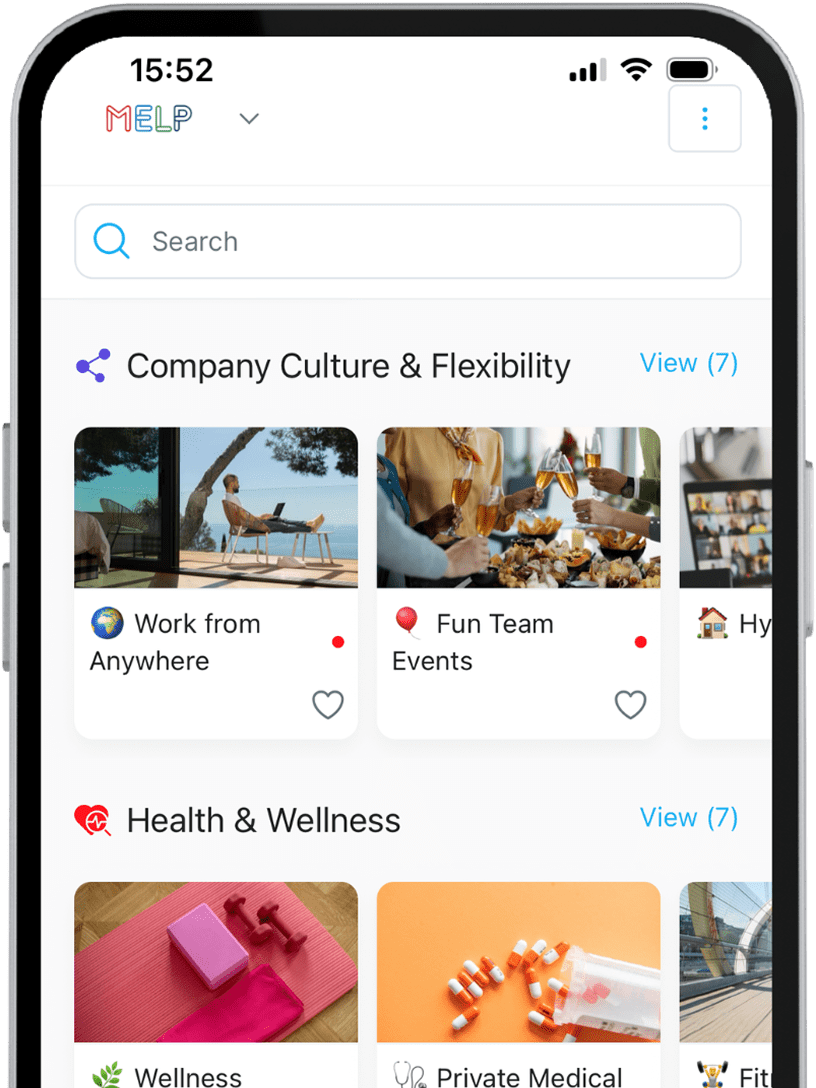
Employee benefits are no longer just a nice extra alongside pay. They are a core part of the employee experience and a powerful way to show your people you genuinely care. MELP is an all-in-one employee benefits platform that offers over 10,000 personalised employee perks in a single, mobile-first app, so every staff member gets the benefits they actually value.

of employees say they feel confused about their benefits
of employees are interested in the ability to tailor their benefits
All employee benefits in one place
Managing workplace benefits does not have to be complicated. MELP gives HR teams a single platform to set up, communicate, and improve their employee perks offering across every team and location.

Set up your benefits catalogue
Not sure where to start? Our experts will guide you through best practices for building your staff benefits offering.

Upload employee information
Our excellent customer service team is here to help you onboard employees, organise groups, allocate budgets, and much more.

Define the rules
Decide on your internal policies for benefits for staff, and we'll help implement them effectively.

Analyse and improve
Our efficient analytics feature allows you to monitor employee wellbeing and engagement metrics while continuously improving your benefits offering.
No more guesswork with employee benefits
Let employees choose the employee perks they value most.
Privacy
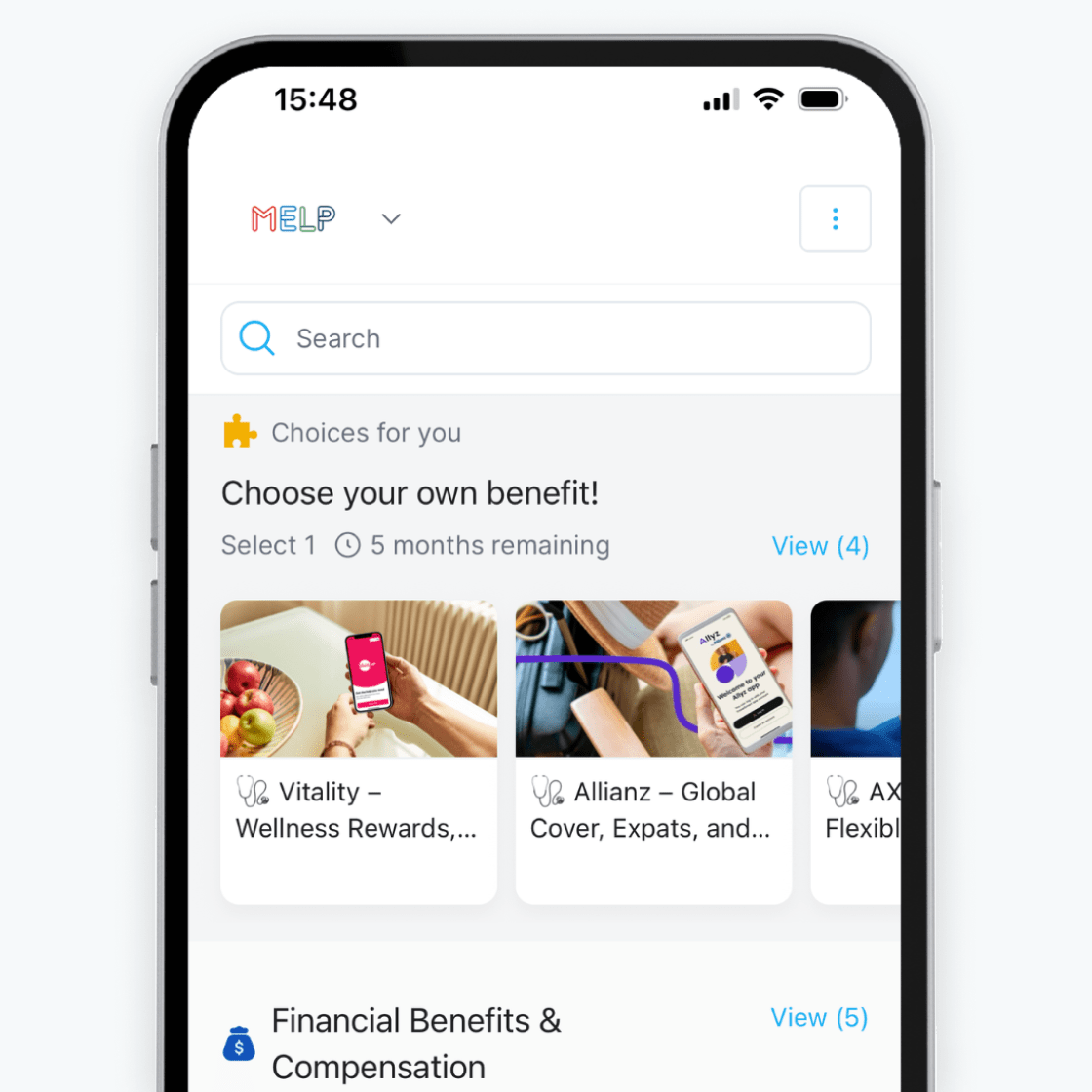
Each team member can view only their own set of benefits to employees, tailored to their group, allocated budget, and other selected filters.
Personalisation
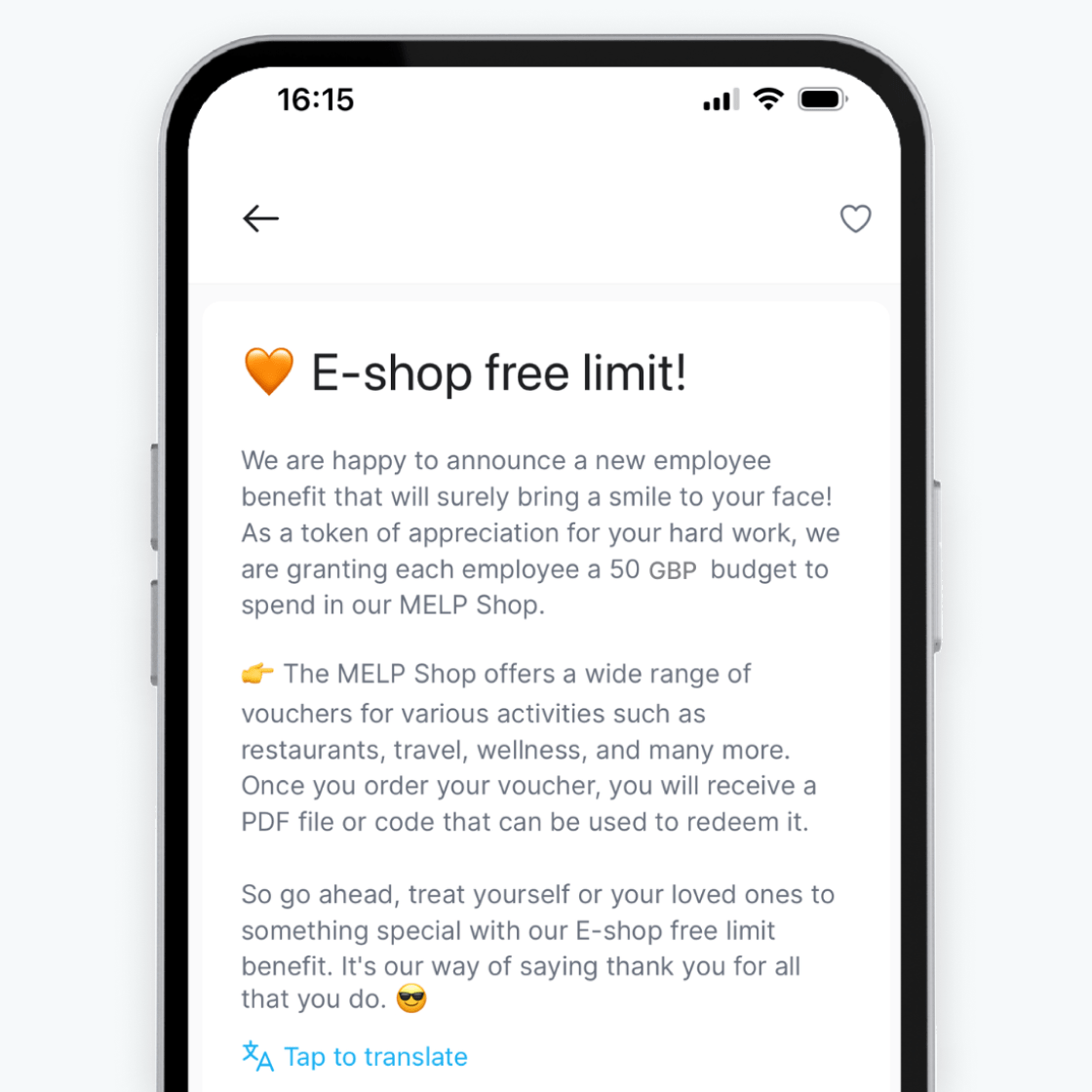
Employees can choose products and services from the MELP online shop, creating their own personalised employee benefits package based on their individual needs.
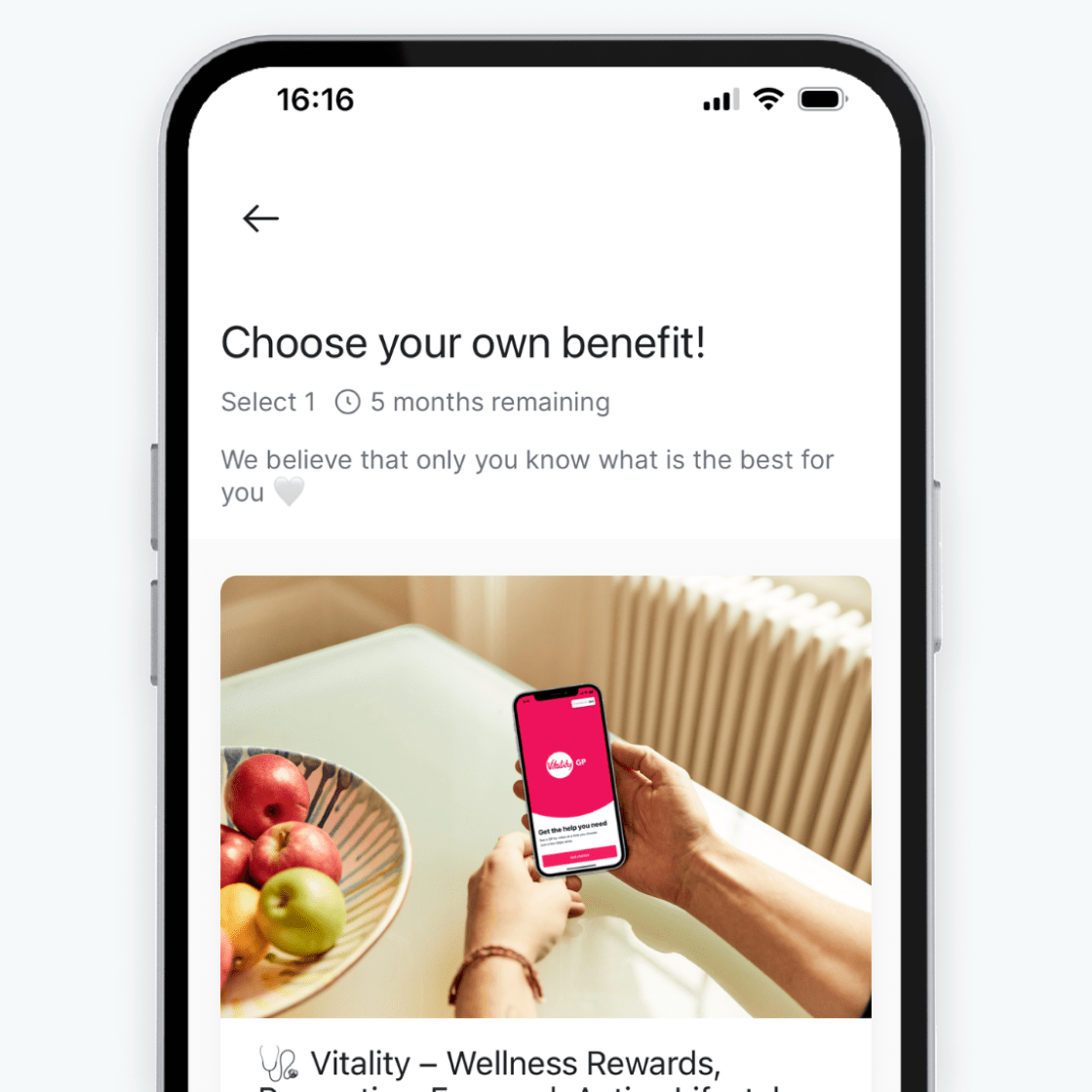
Less manual work
With automation and self-service expense compensation, we're committed to making life simpler for all employees, including HR teams.
What really won us over was the ability to see all the additional benefits the company offers employees in one place, on a single platform.


Employees can find plenty of information in the MELP system, while we, as HR team members, can quickly see which benefits work, which don’t, which ones are interesting and attractive, and which need to be changed.

"MELP stands out for its flexibility in helping companies implement personalised benefits solutions. The partnership process went extremely smoothly, and the offers for employees were quickly realised."


What are employee benefits?
Employee benefits are the additional forms of support, rewards and services you provide alongside salary, also named HR benefits. They are designed to improve quality of life at work and outside it, helping employees feel supported, secure and valued.
Some benefits are contractual and form part of employee benefits packages built into the employment agreement, such as paid holiday or pension contributions. Others are non-cash benefits, like wellbeing support, employee discounts or development opportunities.
Increasingly, benefits also include everyday tools that make working life easier, from flexible working arrangements to access to information, employee recognition and feedback.
At their best, employee perks act as practical enablers. They reduce stress, remove friction from daily life and help people focus their energy on meaningful work rather than worrying about finances, health or feeling overlooked.
Why offer employee perks?
For HR leaders and decision-makers, employee benefits deliver both people impact and business value. A thoughtful benefits offering helps you stand out in a competitive talent market, reduces employee turnover and supports engagement across the organisation.
Benefits also play a critical role in inclusion. Office-based, frontline and hybrid employees don’t experience work in the same way. Accessible, well-communicated benefits help ensure everyone feels equally supported, regardless of where or how they work.
On a day-to-day level, benefits signal trust and appreciation. When employees feel recognised and supported, they are more likely to stay engaged, contribute ideas and go the extra mile. Over time, this strengthens culture, improves productivity and builds long-term loyalty, which is why leading employee benefits companies treat benefits as a strategic priority rather than an operational afterthought.
Different types of benefits for staff
Different types of employee perks address different needs in working life. A strong employee benefits package usually combines several categories, balancing financial security, wellbeing, flexibility and recognition. Understanding how these benefit types work together helps you create an offering that supports your people holistically, rather than relying on a single perk to do all the heavy lifting.
- Financial benefits: these focus on security and everyday value, helping employees feel more confident about their finances through pensions, savings options, salary sacrifice schemes and discounts that make their money go further.
- Health and wellbeing benefits: these support both physical and mental health by offering access to mental health resources, employee assistance programmes, fitness options and healthcare services that help employees stay well and resilient.
- Flexibility benefits: these give employees greater control over how and when they work, including voluntary employee benefits that let staff opt in to what suits them, including flexible hours, remote or hybrid working options and leave policies that support different life circumstances.
- Development benefits: these invest in long-term growth by providing learning resources, training budgets and opportunities to build new skills, supporting both career progression and organisational capability.
- Recognition benefits: employee recognition benefits reinforce positive behaviours and contributions through rewards, peer recognition and visible appreciation.
When these staff benefit types are thoughtfully combined, they create a more balanced and inclusive employee experience. Instead of offering benefits in isolation, successful organisations look at how each category supports real employee needs and contributes to employee engagement, retention and performance. The key is not offering more, but building an employee benefits scheme with the right mix, clearly communicated, easy to access and relevant to your workforce.
Mandatory workplace benefits
Every employee benefits strategy starts with the basics. Certain workplace benefits are required and form the foundation of fair, compliant employment. These typically cover areas such as paid leave, pensions and family-related rights, and they set the minimum standard employees expect from a responsible employer.
While these perks can sometimes be seen as hygiene factors, getting them right is critical. Clear policies, simple employee benefits administration and easy access reduce confusion and frustration, while consistent communication helps employees understand and trust what’s in place. When the fundamentals are handled well, they create stability and confidence across the workforce.
From there, optional benefits can do their job properly, helping you stand out as an employer, reflect your values and tailor support to the real needs of your people, rather than compensating for gaps in the basics.
What staff benefits do employees actually want?
Employees don’t all want the same things. What they value depends on their life stage, income, responsibilities and role. That said, some common priorities come up time and again.
- Affordability and everyday value that genuinely helps with living costs
- Flexibility to choose staff benefits that fit individual needs
- Support for mental and physical wellbeing
- Time, autonomy and work-life balance
- Feeling recognised and appreciated for their contribution
The most effective benefits strategies are built on listening. Regular employee engagement surveys, feedback and usage data help you understand what's working, what's not and where to adapt. The most effective employee benefits solutions prioritise choice and accessibility over flashy perks that go unused.
Empowering your team with employee benefits from MELP
Employee benefits have the greatest impact when they’re part of a connected experience rather than a disconnected list. MELP brings benefits, recognition and internal communication together in one mobile-first employee benefits platform, making it easier for employees to see, understand and use what’s available to them.
For HR teams, this means simpler administration, clearer insights and better uptake across the workforce, driving employee engagement and retention over time. For employees, it means everything in one place: benefits that fit their needs, recognition that feels genuine and communication that keeps them connected.
If you're looking to turn your benefits strategy into a daily experience that supports employee engagement and wellbeing and culture, see how MELP compares to other employee benefits providers . Discover what sets a modern platform apart. Request a demo or speak to the team to see what's possible.
Ready to improve your employee benefits?
FAQ about employee benefits

Employee benefits are the additional forms of support, rewards, and services provided alongside salary to improve quality of life at work and beyond. They matter because a thoughtful benefits offering helps organisations attract and retain talent, supports employee wellbeing, strengthens culture, and drives engagement. When employees feel genuinely supported, they are more likely to stay, perform well, and contribute positively.
The most common types of staff benefits include financial benefits such as pensions and salary sacrifice schemes, health and wellbeing benefits including mental health support and fitness options, flexibility benefits like remote and hybrid working, development benefits such as training and learning resources, and recognition benefits that reward positive contributions through peer appreciation and rewards.
MELP allows organisations to offer individually tailored benefits that meet the diverse needs of employees, with over 10,000 different options to choose from.
Yes, companies can create their own benefits program, allocate the budget, and allow employees to choose from the available options.
MELP has no limit on the number of employee benefits. If you have valuable benefits you want to offer employees, simply add them to the app.
You can add any type of benefit. MELP provides a universal benefits creation form where you can enter a description, assign a category, add links and attach files or images. For more inspiration, visit our benefits catalogue.
Flexible employee benefits are benefits provided to employees that they can freely choose themselves. A well-designed flexible benefits package allows employees to get what they truly need and helps employers use their budget more efficiently.